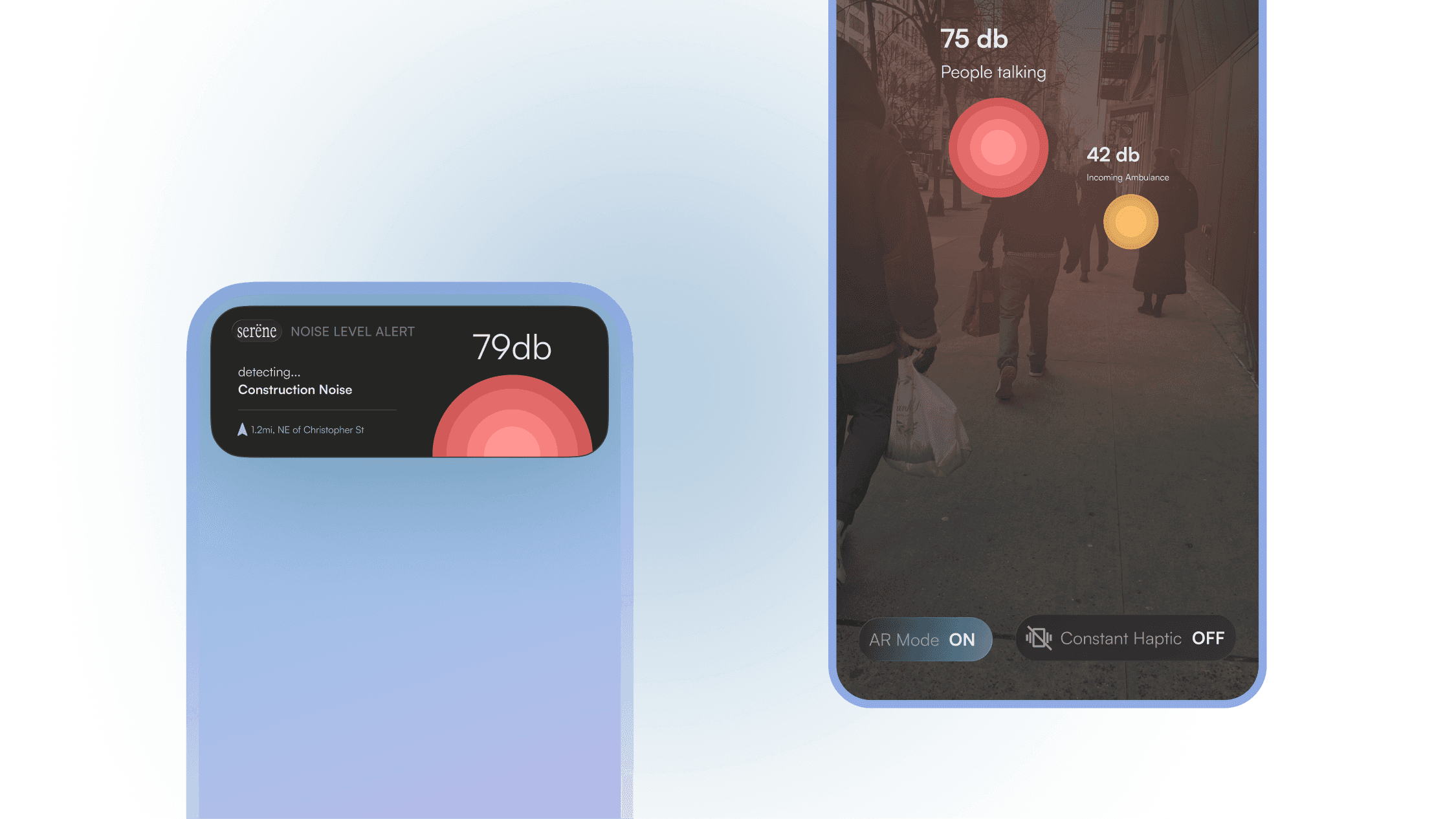
Serene
AR navigation app helping pedestrians with auditory sensitivity move safely through NYC — designed for Toyota's Woven City initiative.
Timeline
4 months (Feb – May 2025)
Role
Solo Product Designer
Outcome
Detailed research report, hi-fi prototypes delivered to the Woven City team at Toyota
Overview
About Toyota Woven City
Woven City is a project currently being built by Toyota at Mt. Fuji, aiming to create a mobility-friendly community. I joined as a co-creator to contribute to the on-going research for urban pedestrians.
Why pedestrians with auditory sensitivity? — A silent struggle in a chaotic city
To live in a big city like New York is to live in an invisible yet visible soundscape. While noise sensitivity is a public health issue, it is not often discussed as one of the main public concerns.
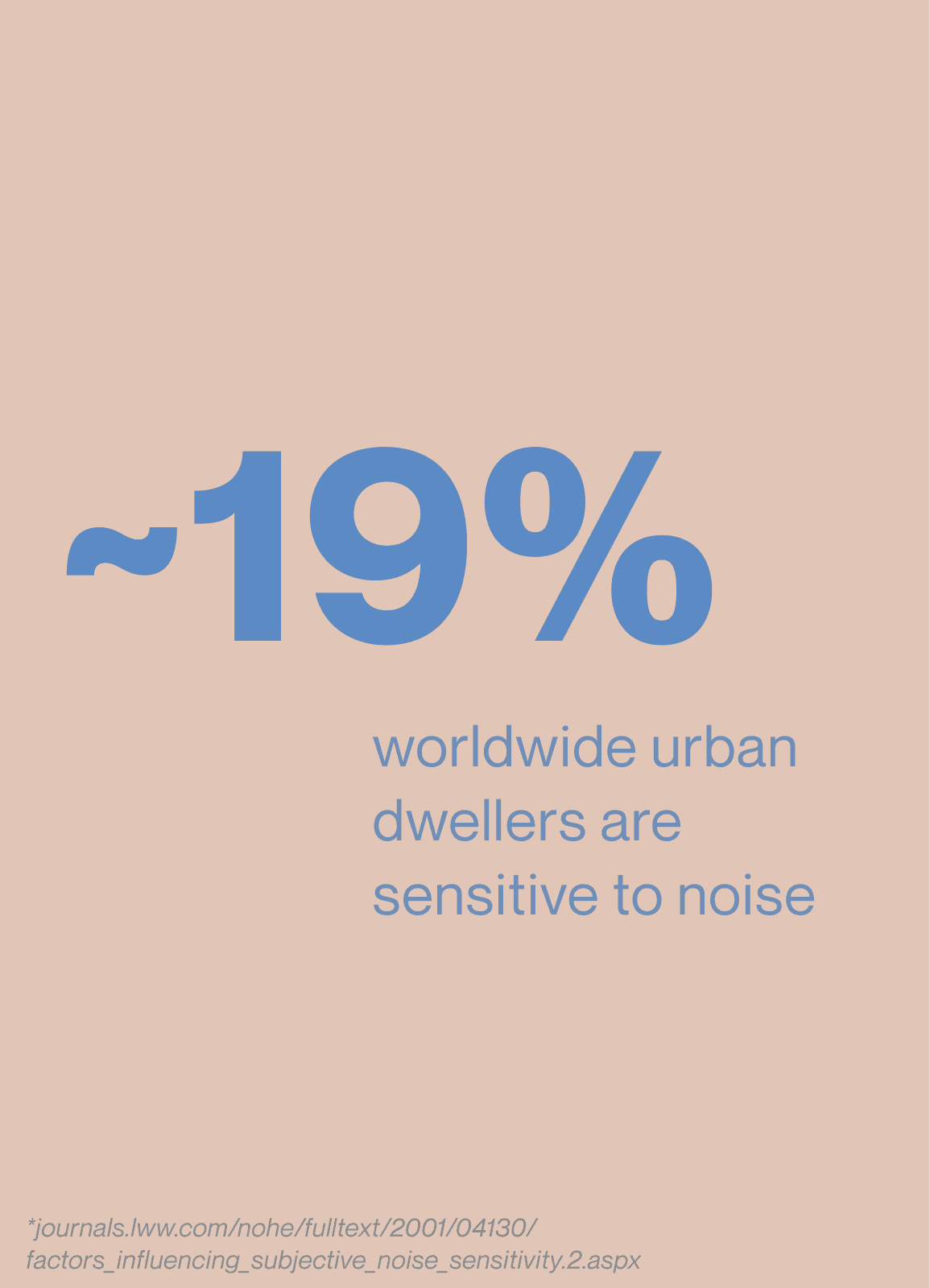
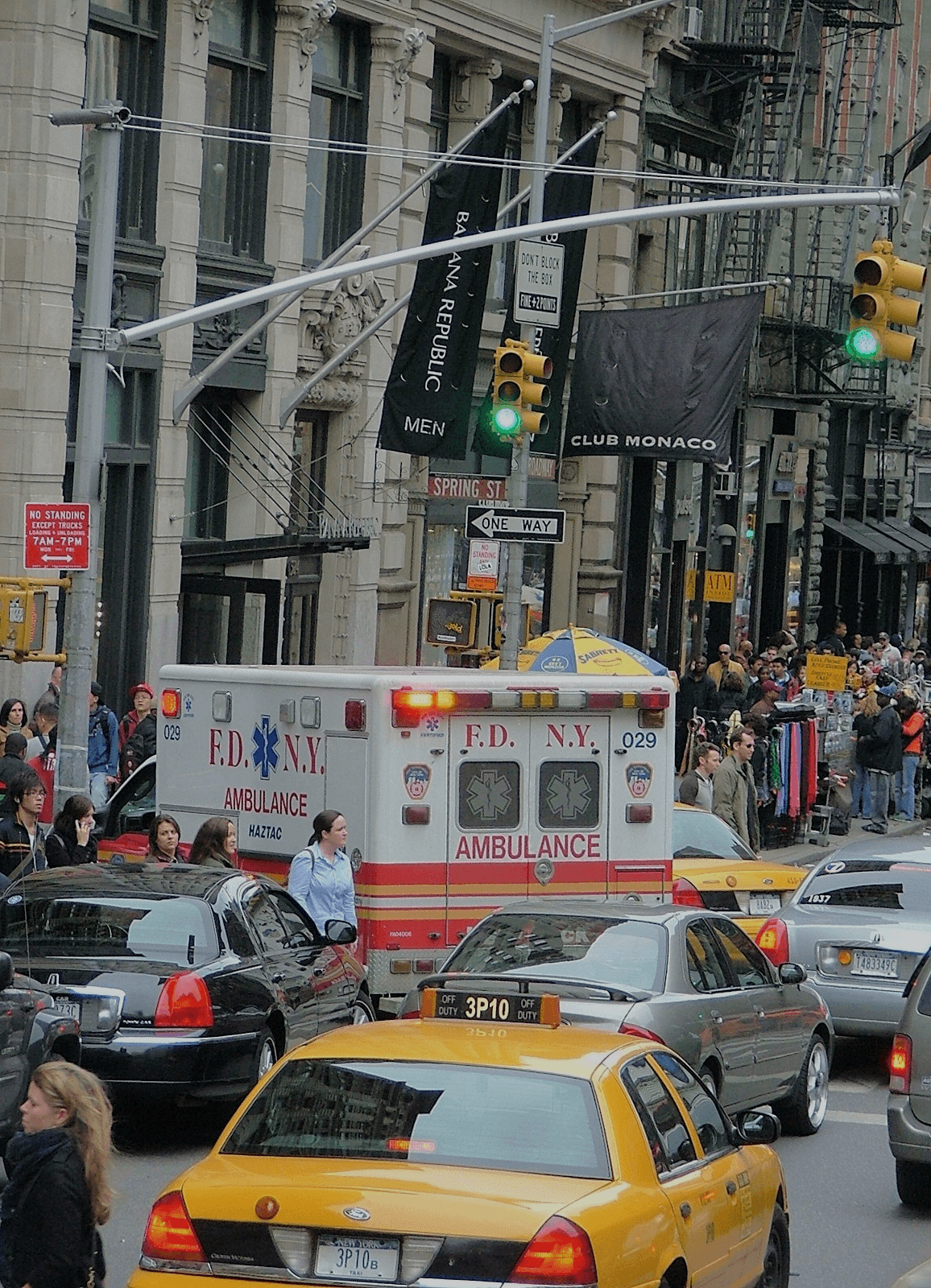
These factors can lead to sensory overload, disorientation, or even anxiety, affecting their ability to make safe decisions on the streets and making everyday travel stressful or unsafe. This is a more common issue than perceived.
How might I help reduce anxiety and ensure safety for pedestrians with auditory sensitivity navigating an urban setting like NYC?
Solution highlights
Ethnography Research
Ethnography Research
Getting to know my audience in real life
Approaching this large problem, I wanted to find a specific angle and common issues that pedestrians with auditory sensitivity face.
| Method | Details | Key finding |
|---|---|---|
| Observational study | 2 locations, 1 hour each | Loud noise from a construction site on Canal St caused people to jolt and a halt for all pedestrian traffic. |
| In-depth interviews | 5 individuals | "Even if I run late, I'd still make sure to bring my headphones." |
| Secondary research | 6 articles | 5.9% of US adults had sensitivity to everyday sounds. |
| Diary studies | 5 individuals, 5 days | "If I hear someone trying to get my attention, it distracts me." |
Portrait of typical New Yorkers sensitive to noise
- They are daily headphones and earbuds users. Current solutions for pedestrians with auditory sensitivity are limited, with noise-cancelling headphones and earbuds being the only method for mitigating urban noise exposure.
- Physical and mental reactions from spiky noises that cannot be blocked out. Even though pedestrians rely mostly on noise-cancelling headphones, they still experience physical and emotional discomfort from abnormally loud or spiky noises that headphones cannot block out.
- They get anxious and lose focus without headphones. In situations that pedestrians have to take off headphones (e.g. commuting with friends), they lose control of their focus, getting distracted and anxious from the surrounding urban noises.
How might I help pedestrians with auditory sensitivity feel less anxious and distracted by helping them anticipate the sounds?
Design Iterations
Design Iterations
1. Decibels information on dynamic island
Even though my final version has more information, testers still wanted the full context to skim through instead of decibels information being abstracted.
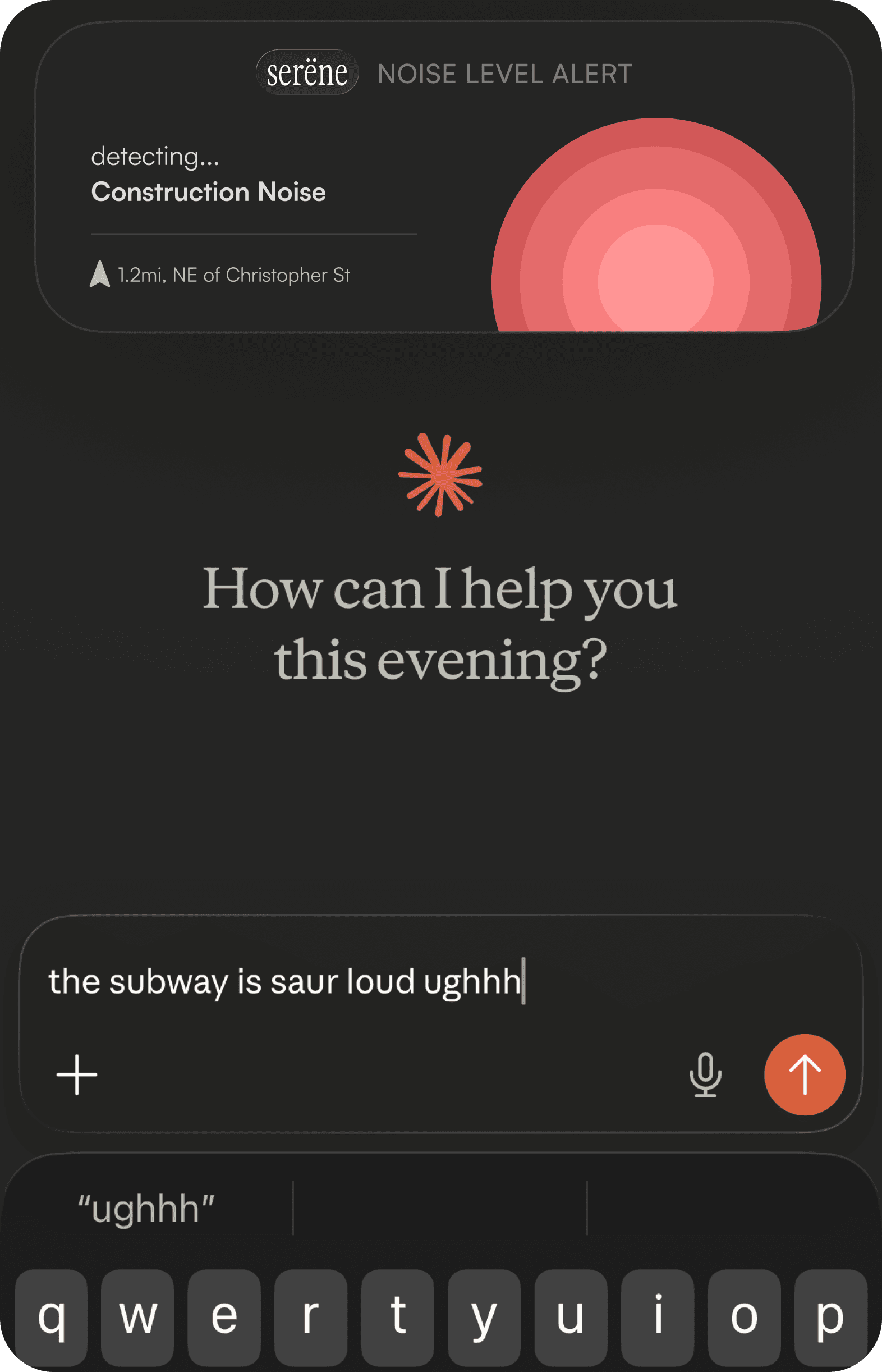
Version 1: relied purely on color
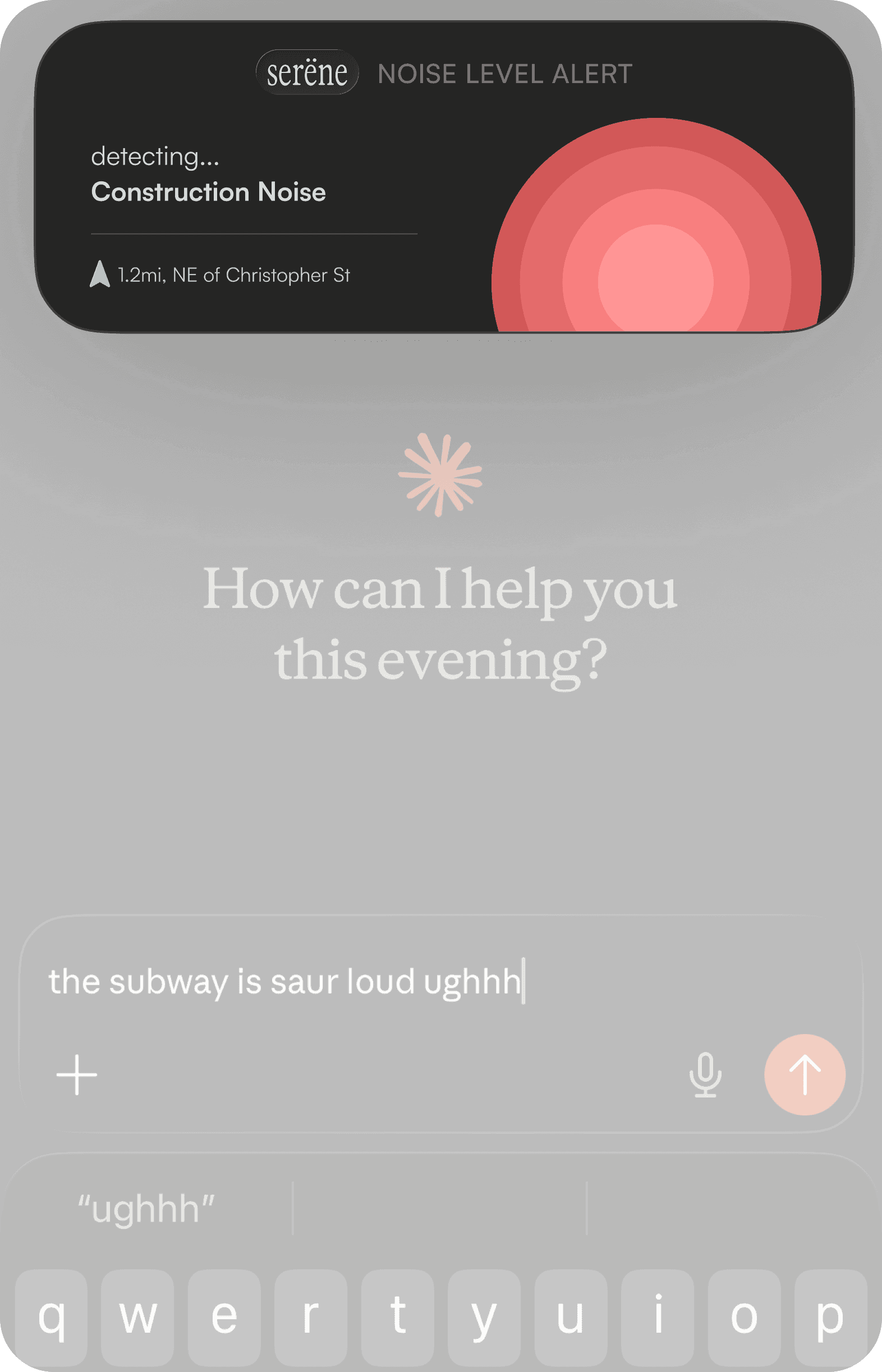
Version 2: color + decibel details
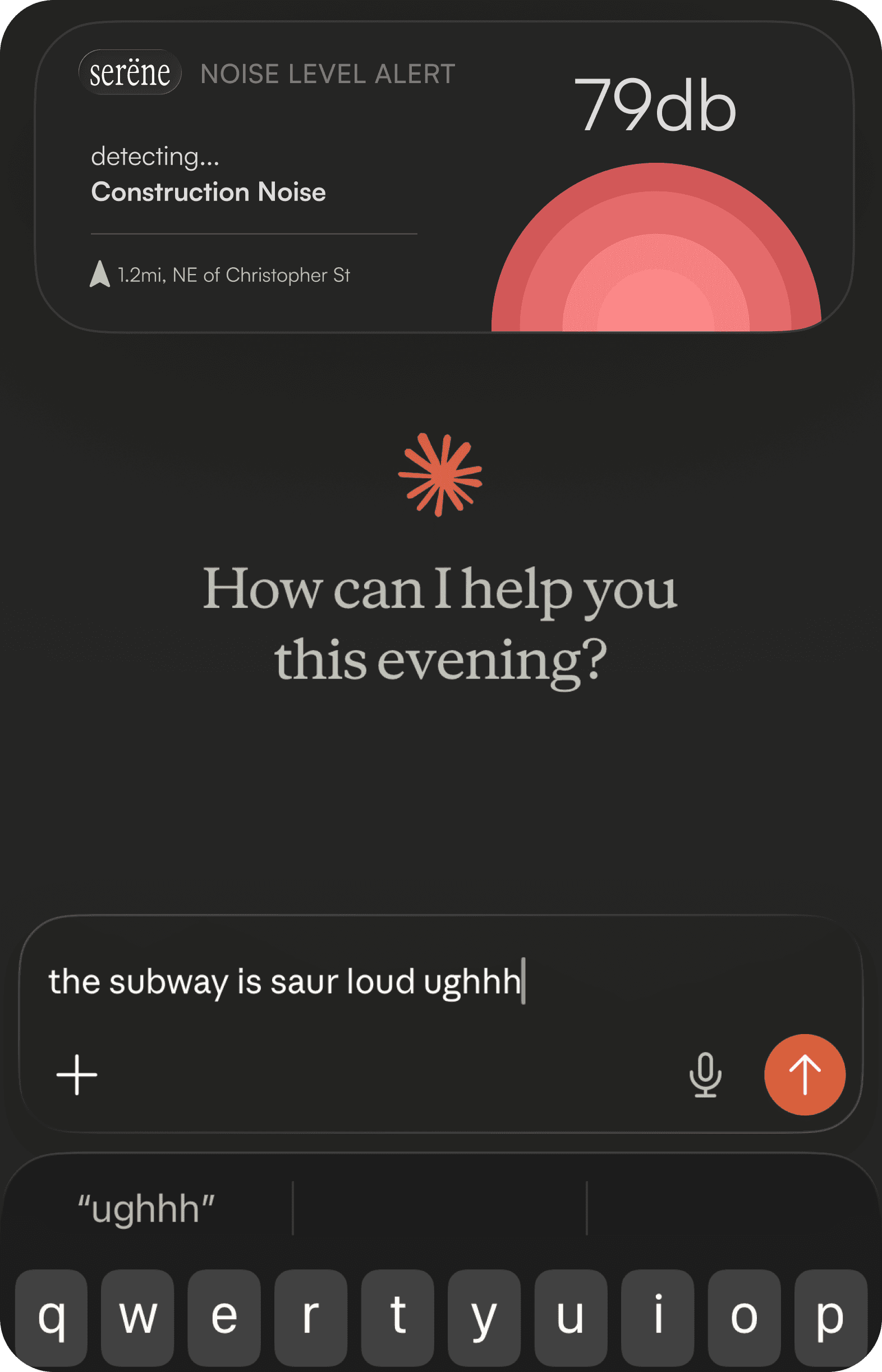
Final v1

Final v2
2. Prioritize location in header area
After 2 rounds of testing, I reduced the logo to make space for both the location and the AR view, as users were getting distracted by its glass treatment.
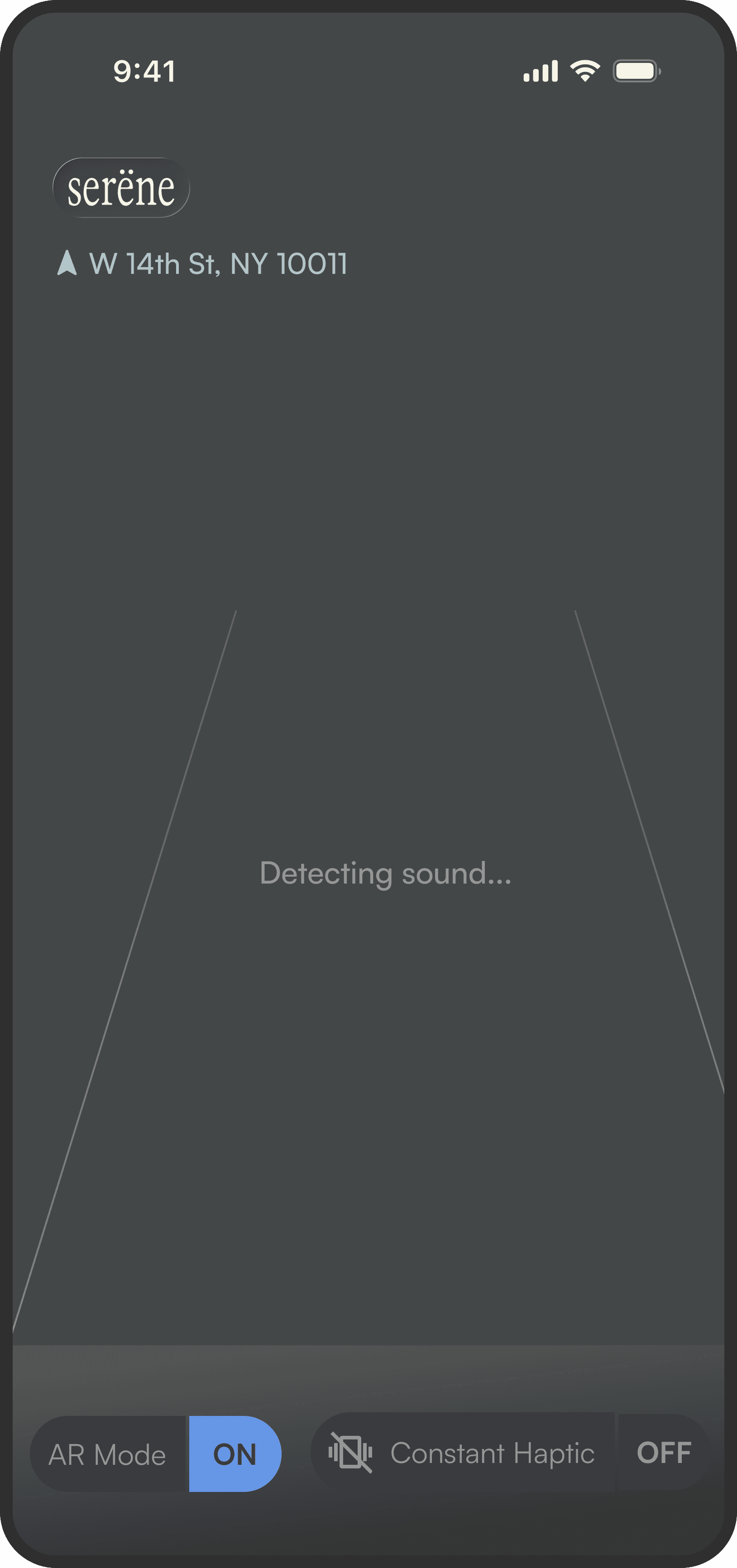
Version 1: left-aligned, unfocused
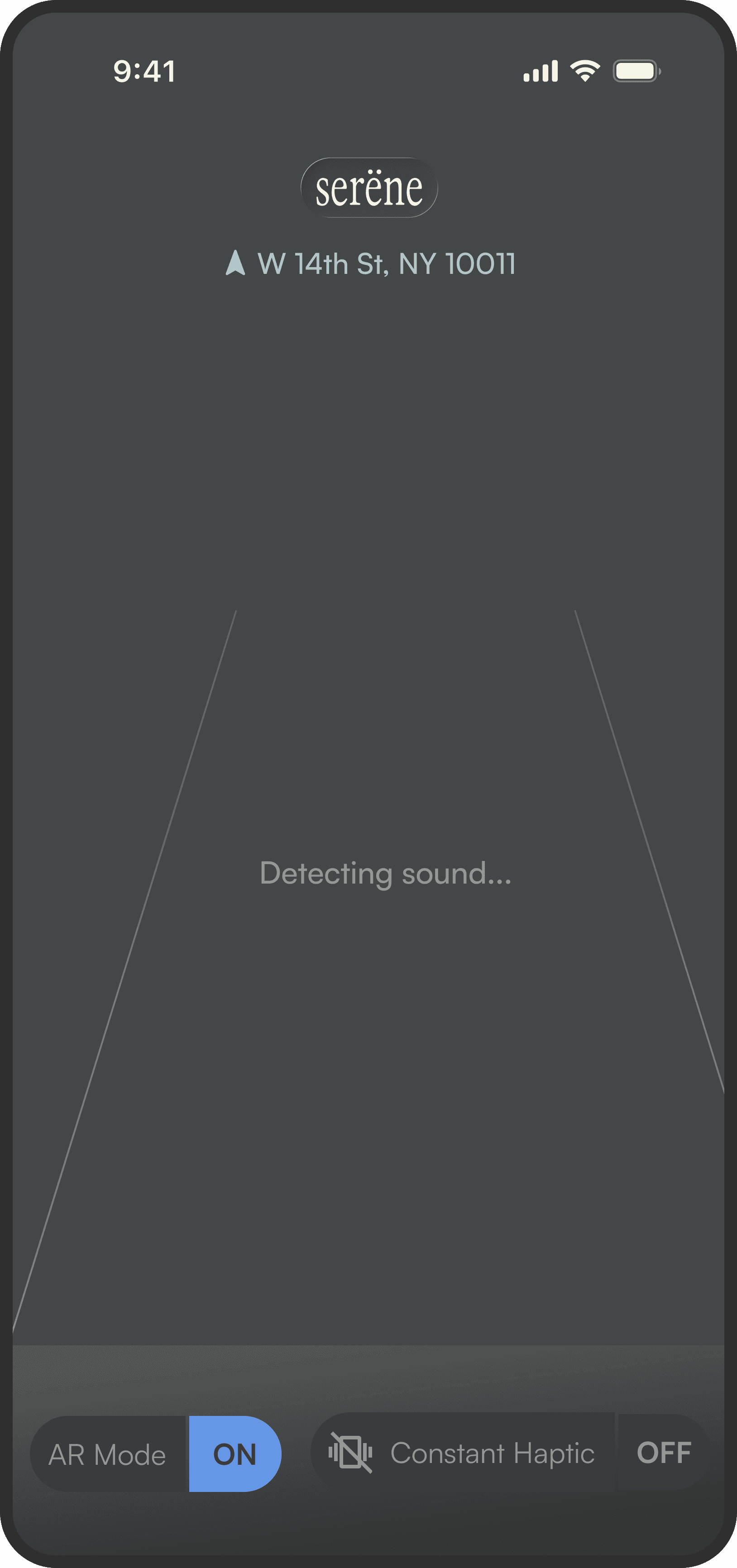
Version 2: centered, logo still taking focus
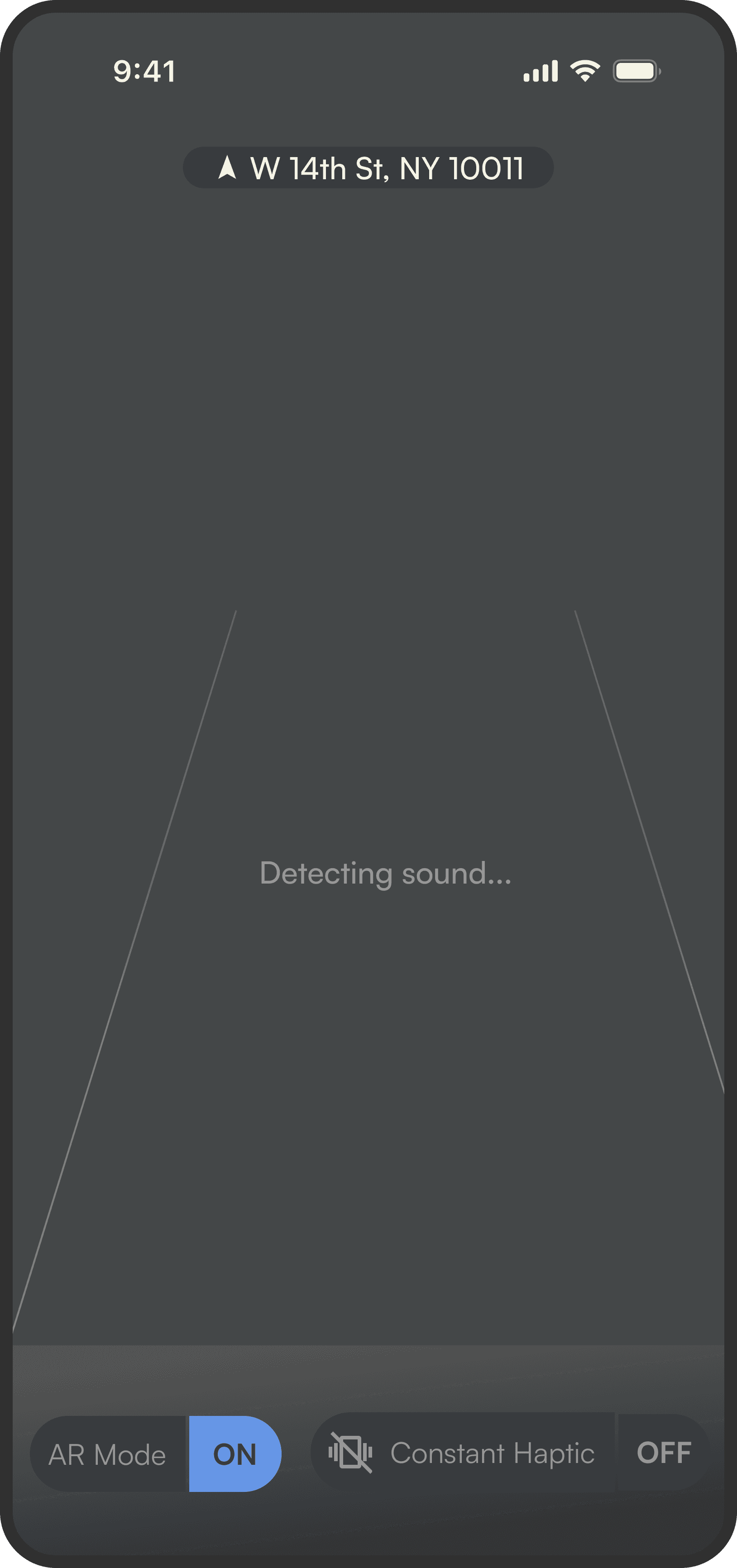
Final: only display location
Final Designs
Final Designs
Gentle onboarding with introduction to the concepts of soundscape and constant haptics
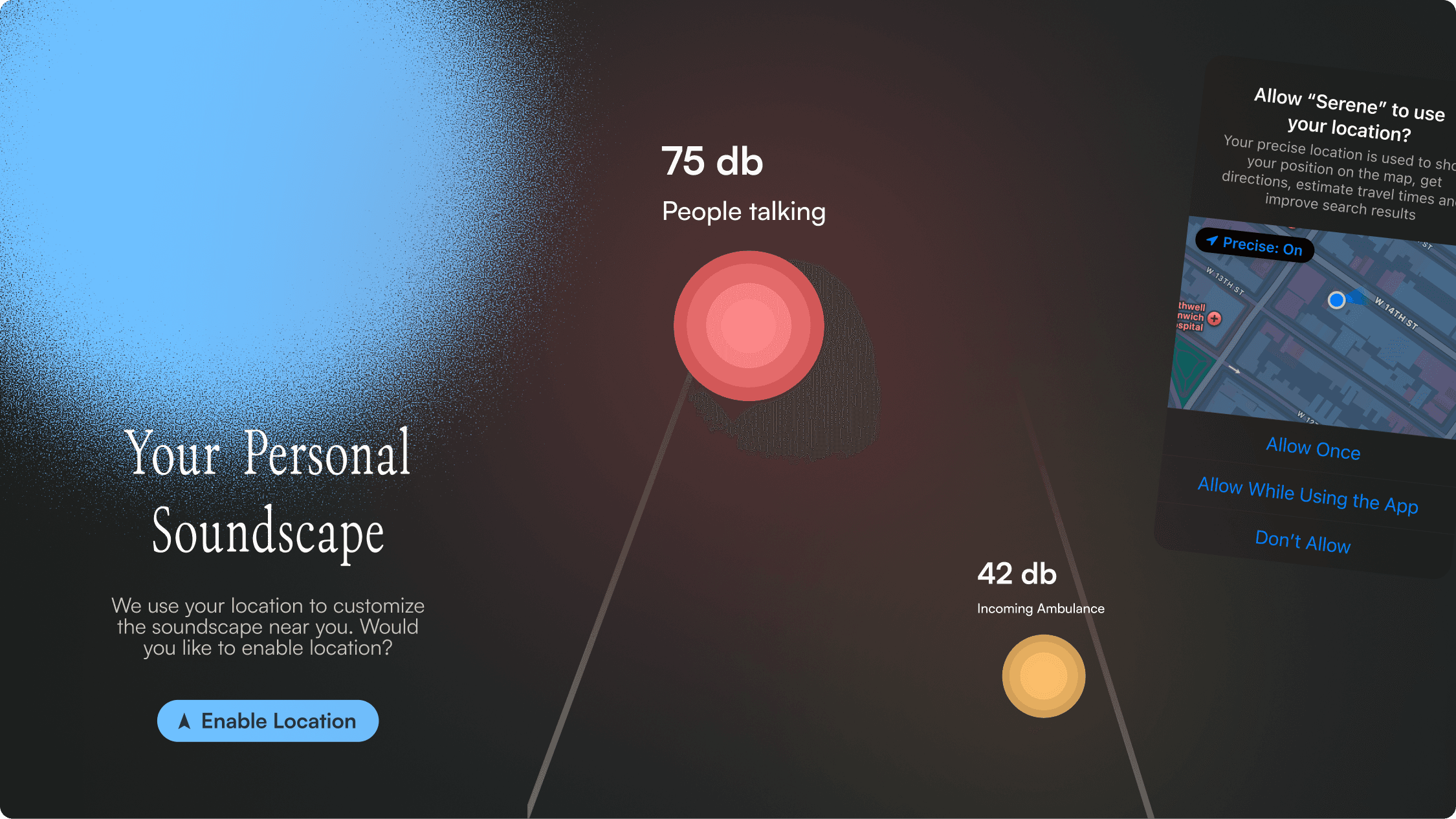
Scoping the soundscape with proper location permission
AR mode to live review the sounds with context